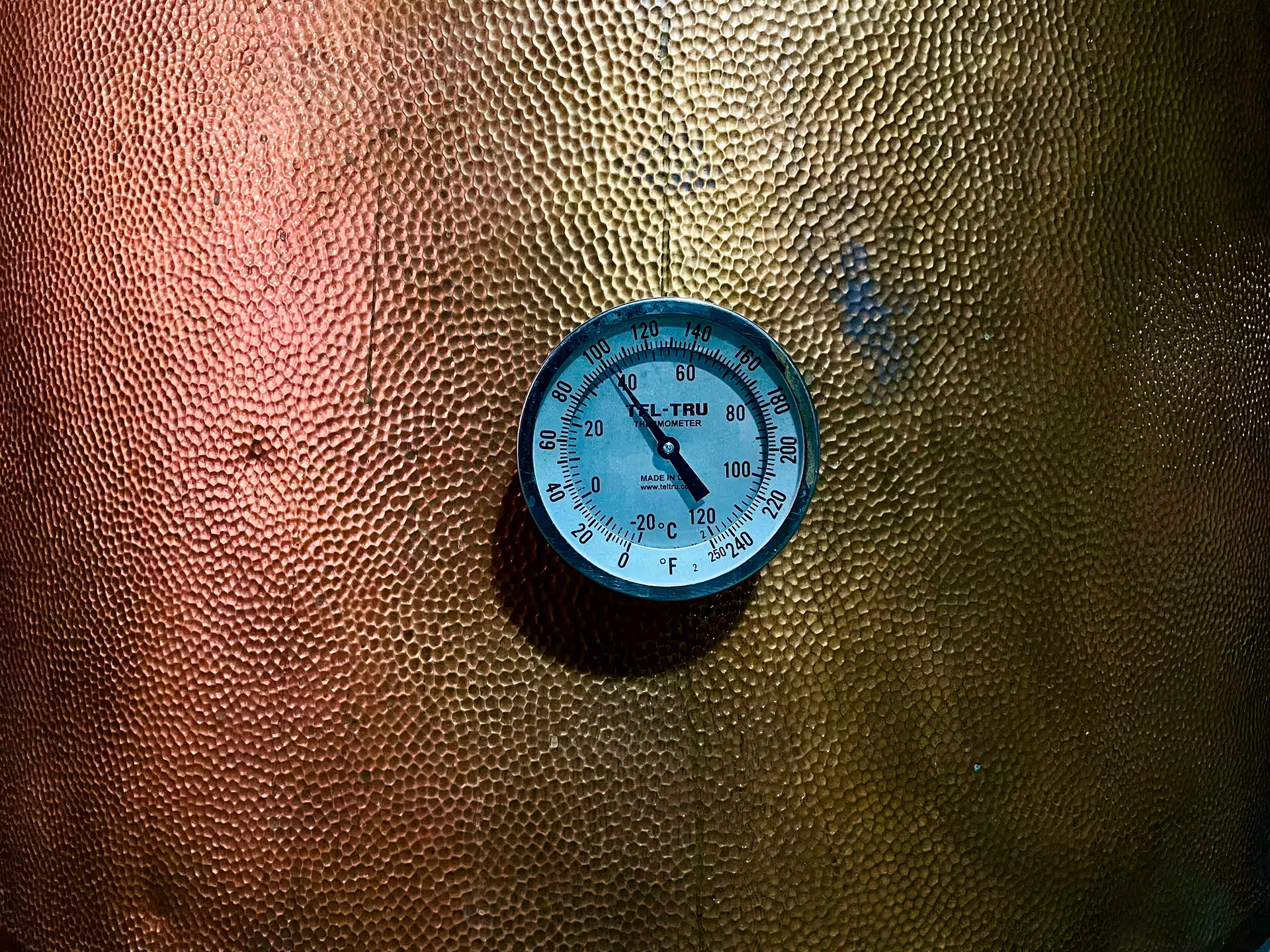

Most bourbon you’ve tasted was made by a machine designed to erase flavor.
That sounds like an exaggeration but it isn’t.
The column still, the workhorse of the modern whiskey industry, was engineered for one job: produce large quantities of high-proof, clean ethanol as fast as possible. It does this brilliantly. It also strips away much of what made the grain interesting in the first place.
At Luminance, we use pot stills. They are slower, less efficient, and harder to control. That is exactly why we chose them.
How a column still works
A column still is a tall, continuous-feed apparatus. Grain mash enters at the top, steam enters at the bottom, and they meet on a series of perforated plates. As the mash flows down and the steam rises, alcohol vapor is separated from the liquid in a single, unbroken process.
The result is a spirit that is extremely pure. High proof. Consistent batch to batch. This is why large producers love it. You can run a column still 24 hours a day, feeding mash in one end and collecting spirit from the other. It scales. It repeats. It produces bourbon that tastes identical whether you buy it in January or July.
But purity has a cost. Those perforated plates don’t just separate alcohol from water. They also separate the spirit from its congeners, the complex organic compounds that give whiskey its texture, its weight, its grain character. The oils. The esters. The things that make a bourbon feel like something in your mouth, not just taste like something.
Column distillation gives you flavor. Pot distillation gives you flavor and body.

How a pot still works
A pot still is the oldest distillation technology in the world. A large copper vessel, a heat source, and a condensing coil. You fill the pot, heat it, collect what evaporates, clean the pot, and start again.
There is no continuous feed. Each run is a single batch. And each batch requires a decision: where to make the “cut” between the harsh early distillate (the heads), the desirable middle (the heart), and the heavy tail end (the tails).
This is where the distiller’s skill becomes the product. A column still makes the same cut every time, mechanically. A pot still requires a human being to taste, smell, and decide. The margin between a rich, complex heart and an unpleasant off-note is narrow.
The tradeoff is real. Lower yield per batch. Longer production time. More labor, more attention, more risk.
But what survives the pot still is fundamentally different from what comes out of a column. The heavier congeners, the fatty acids and esters that a column still strips away, pass through into the final spirit. These are the compounds responsible for that oily, coating mouthfeel that serious bourbon drinkers recognize immediately.
The Luminance approach: Trident pot stills
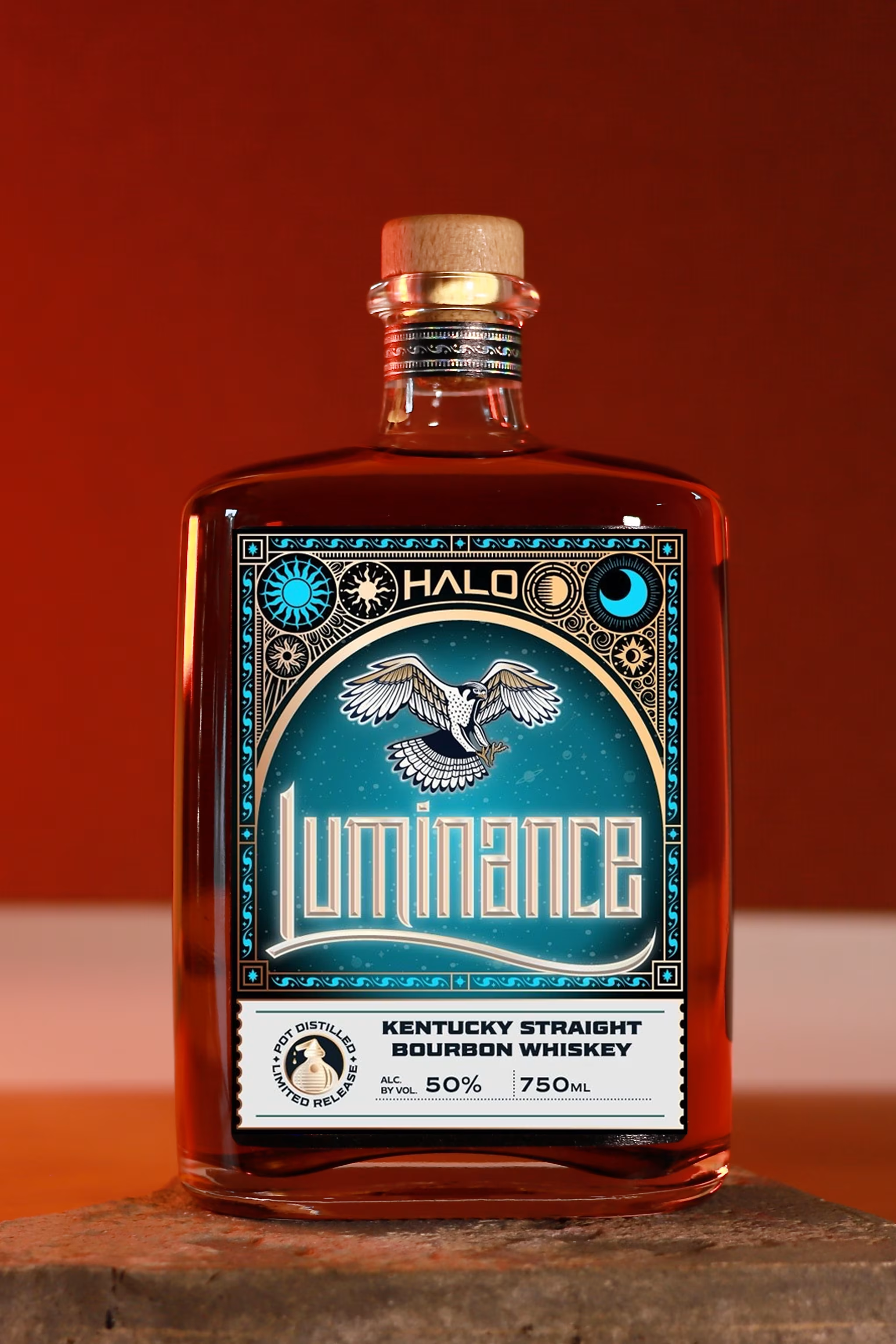
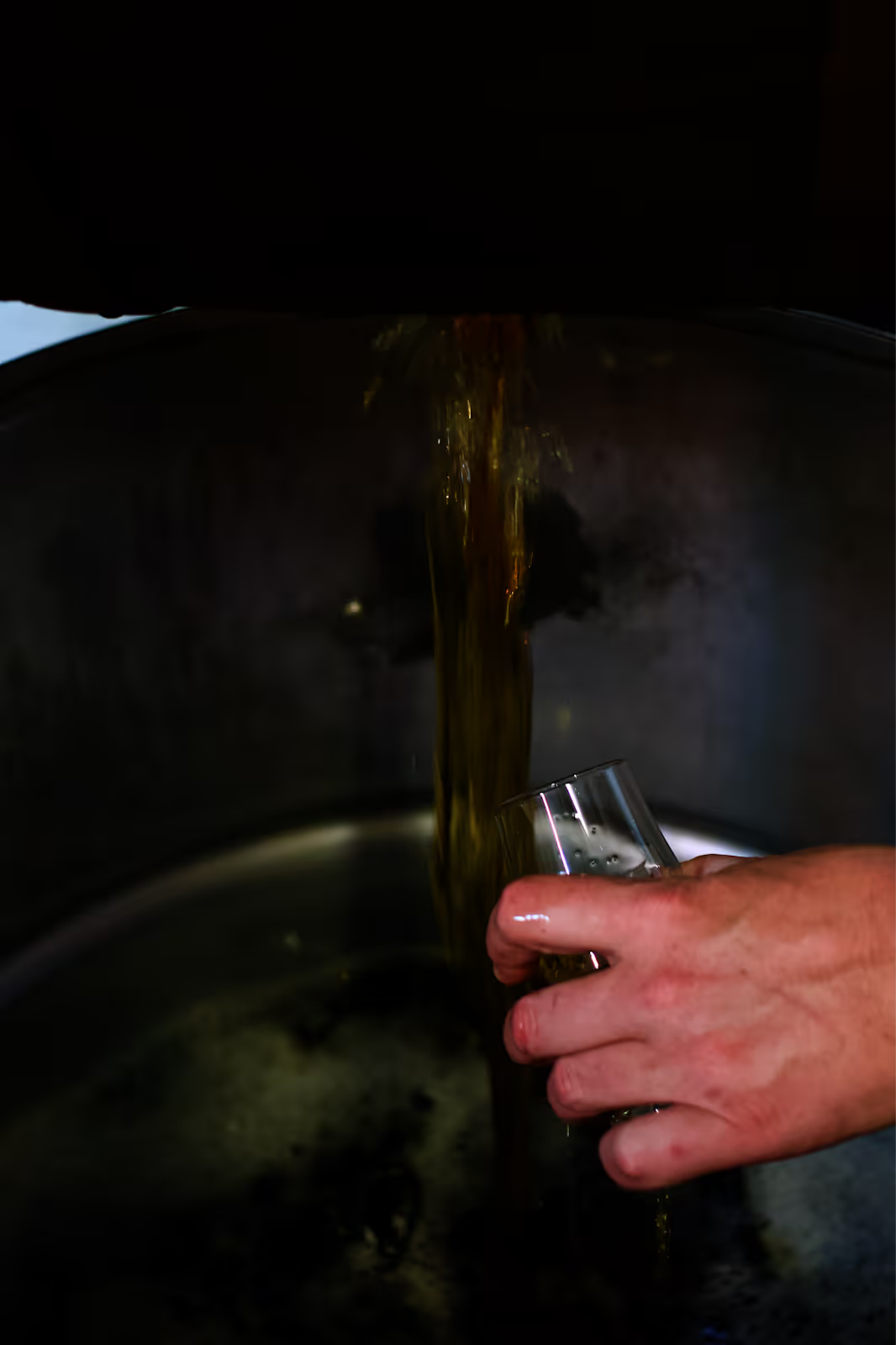
Luminance bourbon is distilled on Trident pot stills, a design built for small-batch artisanal production. Each run processes a limited quantity of our white corn, rye, and barley mash bill, and each run is cut by hand.
This means no two batches are identical. The grain, the season, the ambient temperature, the distiller’s judgment on that particular day. All of it shapes the character of the spirit before it ever touches a barrel.
For a large producer, this would be a problem. Inconsistency is the enemy of a brand that needs to taste the same on every shelf in every state.
For a single barrel producer, it is the point.
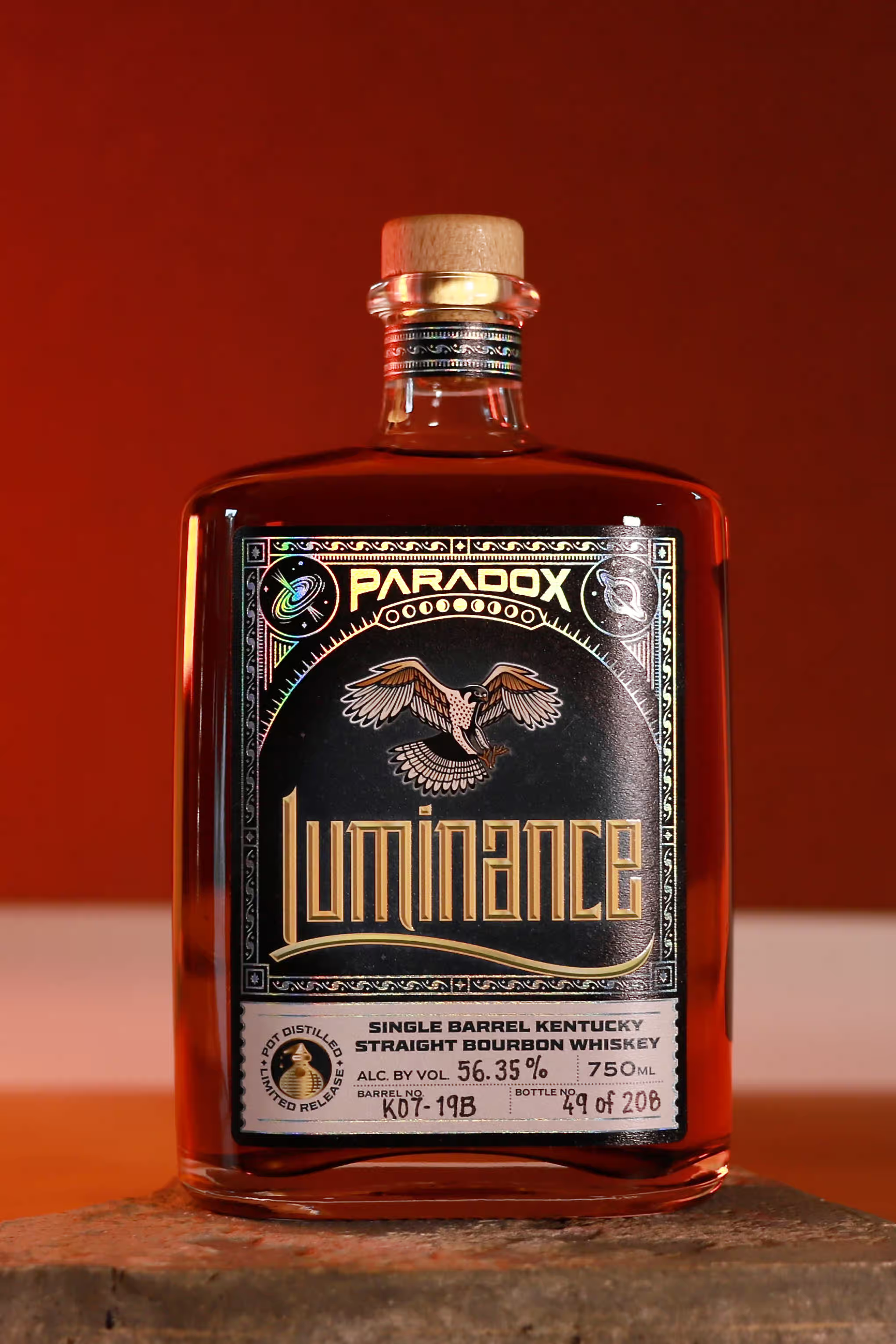
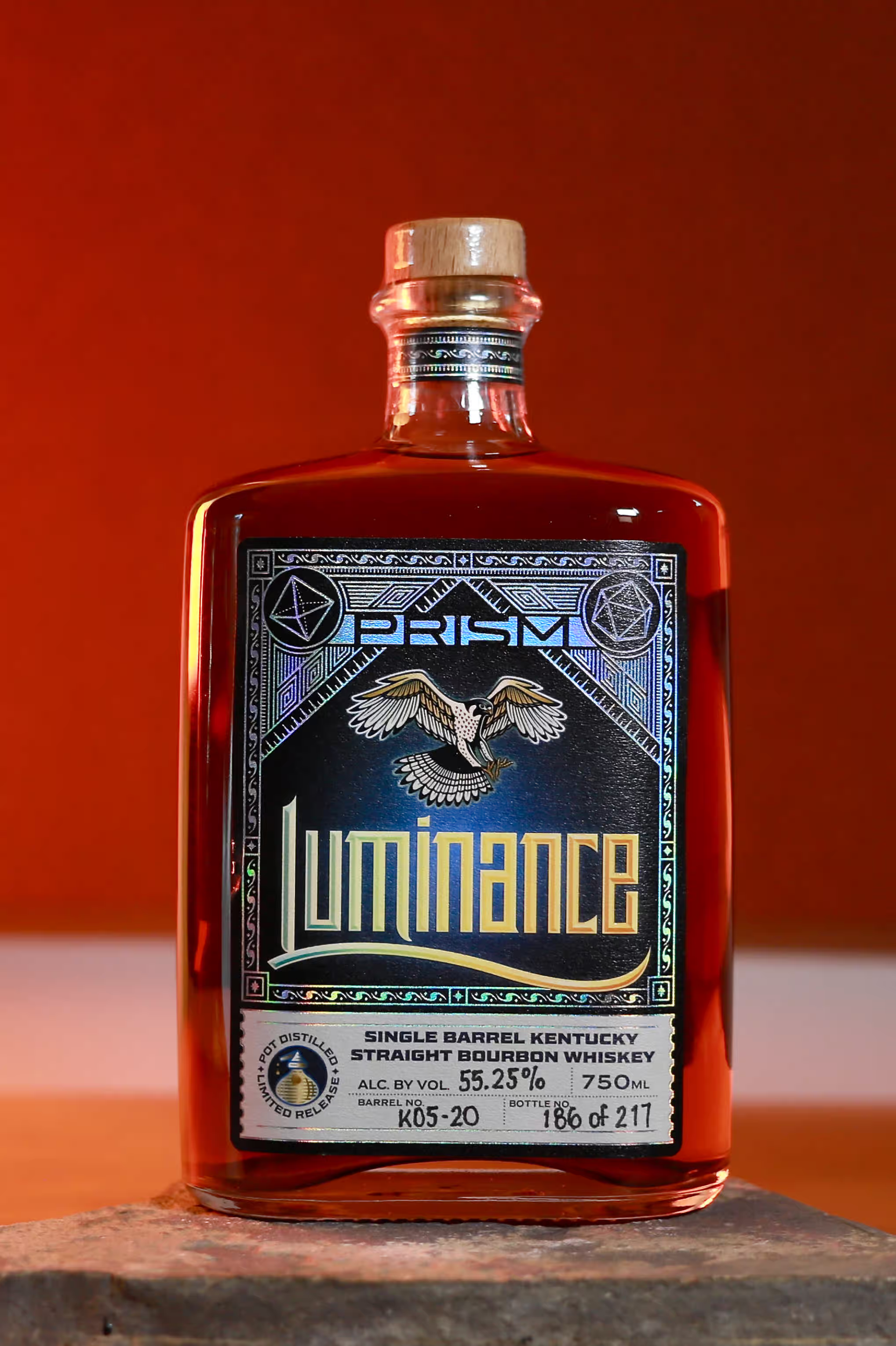
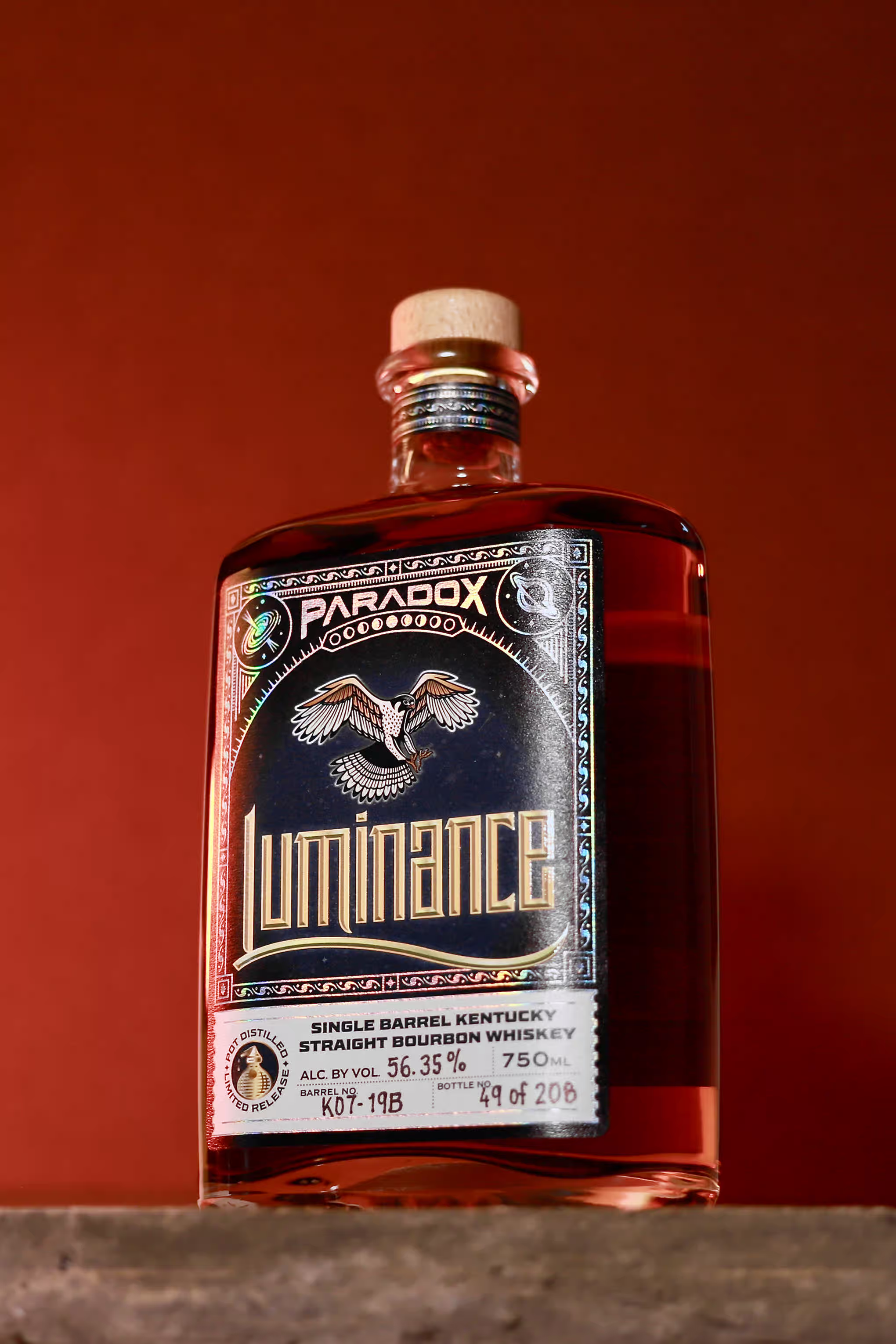
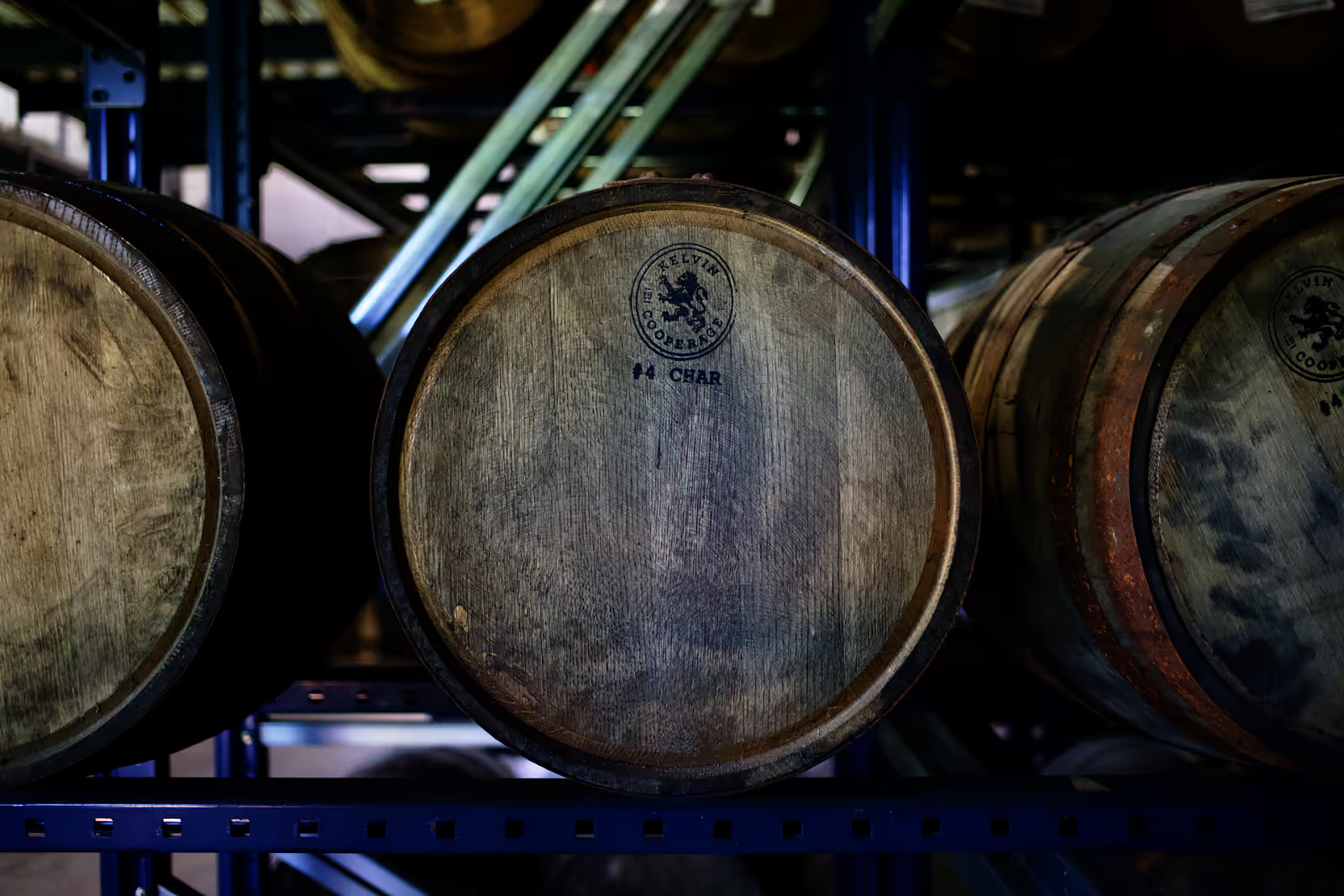
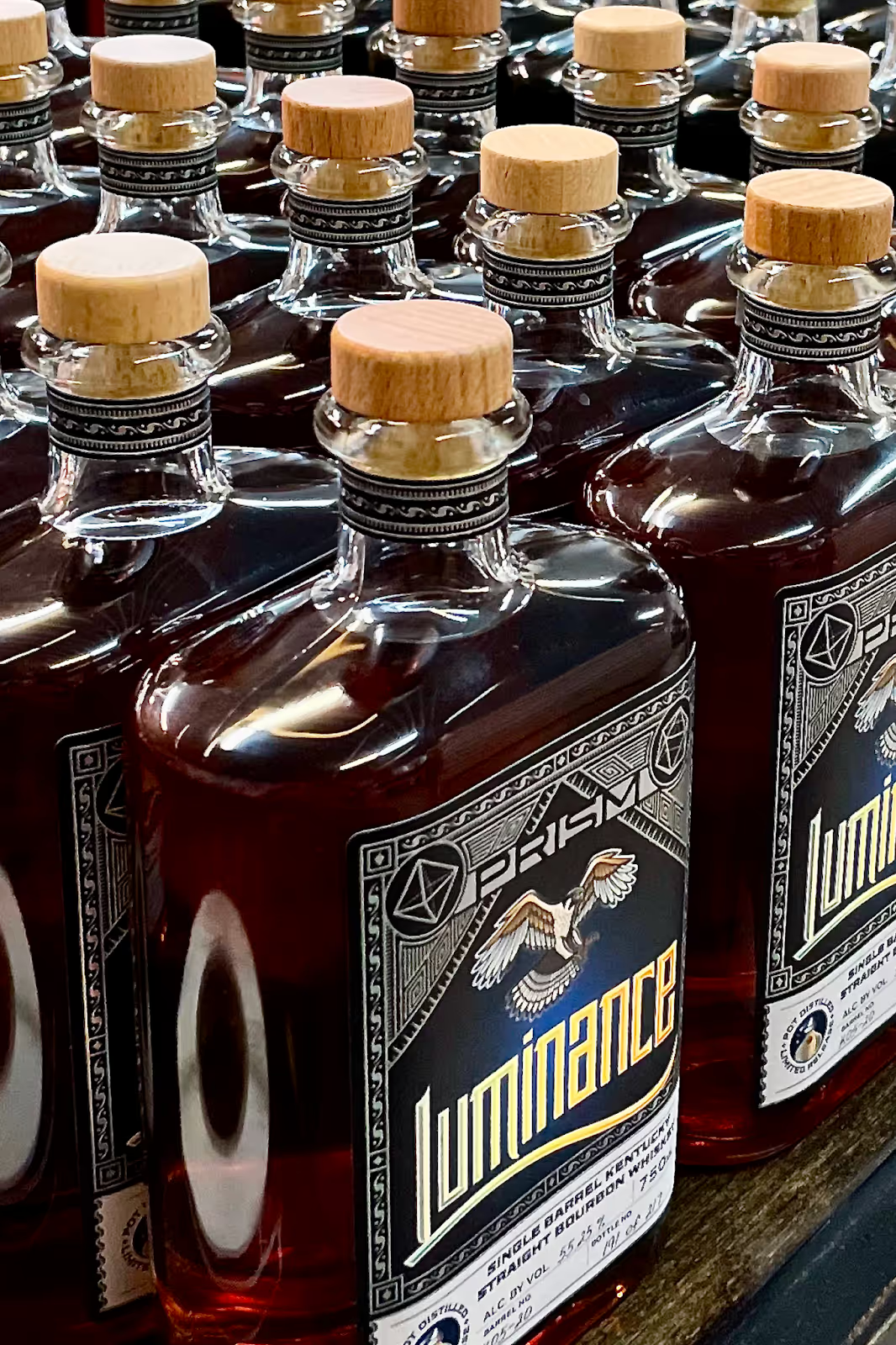
Each barrel begins its life with a spirit that already has its own fingerprint. When we select individual barrels for Luminance Paradox or Prism, six years and five years respectively after barreling, we are choosing from a range of expressions that a column-distilled spirit could never produce.
What you taste
The difference between pot-distilled and column-distilled bourbon is not subtle once you know what to look for.
Pour a standard shelf bourbon into one glass and Luminance into another. Before you taste them, swirl both and watch the glass. The pot-distilled spirit will leave heavier, slower legs on the wall of the glass. That is the oil content, visible before it ever hits your palate.
On the palate, column-distilled bourbon tends to be bright, clean, and thin. The flavor hits and exits. Pot-distilled bourbon sits. It coats. The flavors develop in layers because the heavier compounds release at different rates as the liquid warms in your mouth.
When we say Luminance Paradox delivers notes of dark roast coffee, fig, and baker’s chocolate, those are not just barrel flavors. They are the result of a richer, more complex base spirit interacting with the wood. The pot still gives the barrel more to work with.
It is harder to make bourbon this way. Slower. More expensive per gallon. But when the glass is in your hand, you are not tasting efficiency. You are tasting the grain.

If you want to taste the difference for yourself, explore Luminance Paradox and Prism and see what pot-distilled, single barrel bourbon actually feels like.